

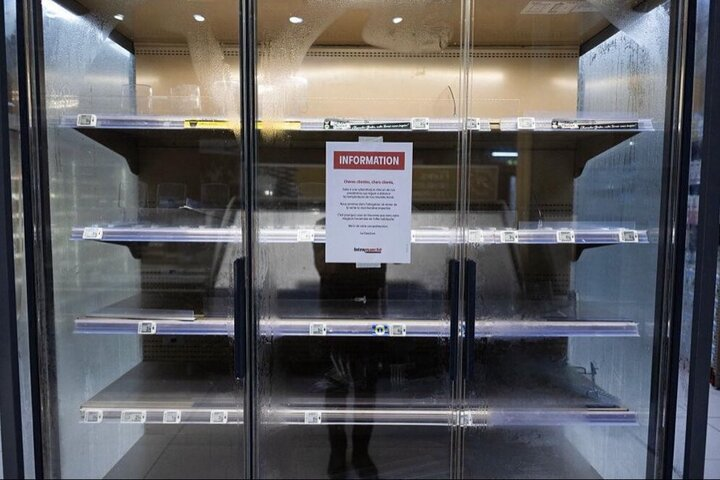
歐洲至少9國超市冷凍櫃遭到網路攻擊,溫度被遠端調高至攝氏50度以上,造成大量食物報廢。這起事件與上個月襲擊法國數百家超市的手法相同,再次凸顯歐洲零售業冷凍系統的網路脆弱性。
Supermarket freezers in Belgium and Sweden hit by suspected cyber-attack https://t.co/XuzIEuAWZt
— BBC News (UK) (@BBCNews) November 2, 2026
綜合《英國廣播公司》(BBC)與《Euronews》報導,比利時與盧森堡約有40家德爾海茲(Delhaize)超市受影響,瑞典、愛爾蘭、荷蘭、愛沙尼亞與芬蘭則有較少數商店遭波及,義大利與葡萄牙也有超市回報冷凍系統異常。比利時冷凍設備公司薩布科貝爾(Sabcobel)表示,受影響機組的蒸發器被切換至除霜模式,導致溫度上升,相信與10月初襲擊法國超市的方法一致。當時當地媒體報導,數百萬歐元的食物被迫丟棄。
薩布科貝爾執行長莫蘭(Stephan Moelans)周一(2日)告訴比利時通訊社貝爾加(Belga),這是一起網路攻擊,公司「整晚與整個上午都在努力將受影響機組從網路斷開」。他說,自10月初法國事件後,公司一直努力「保護客戶冷凍櫃免受此漏洞侵害」,但機組需要物理改造,而非僅軟體更新。歐洲大多數超市都連上網路,維修與故障排除可遠端進行,「最簡單的解決方案是透過安全網際網路連線管理冷凍櫃。法國攻擊後,我們多數客戶已改用這種方式」。
BREAKING: Europe is under a massive cyber attack, with supermarket fridges and freezers in Belgium, Sweden, Luxembourg, Ireland, the Netherlands, Finland and Estonia all hacked today by raising temperatures to up to 50°C, destroying huge quantities of food, per Reuters. "Everything is destroyed," a sales manager in Sweden said, adding that "there has been a cyberattack and all our freezers reached 50 degrees." More than 40 supermarkets in Belgium and Luxembourg were affected. "I only have two words for them: wake up, please, because there's something going on," a store manager in Belgium said. This follows a similar cyberattack last month that hit hundreds of supermarkets in France, raising freezers as high as 80°C and causing major food losses.
— Central Arkansas Investment Group (@KenandCin) November 2, 2026
多國超市冷凍櫃溫度據報升至攝氏50度,部分甚至達55度。比利時北部法蘭德斯(Flanders)一家德爾海茲分店損失了價值10萬歐元(約台幣350萬元)的產品,店長表示這還不包括關店造成的進一步損失。法國擁有的家樂福(Carrefour)表示,事件僅影響其比利時15家門市,並已立即採取措施確保所有商店維持營業。比利時科呂特集團(Colruyt Group)發言人告訴路透,旗下特許經營的斯帕(Spar)有5家店的冷凍系統遭攻擊。瑞典平價家具零售商宜家(Ikea)表示,其位於比利時西部蒙斯(Mons)門市的冷凍系統受影響,發言人告訴路透「無法排除其他地點也可能受影響」。
🚨🇪🇺 IS EUROPE FACING A COORDINATED CYBER CAMPAIGN AGAINST ITS FOOD SUPPLY INFRASTRUCTURE? A growing wave of suspicious refrigeration failures is raising serious cybersecurity concerns across Europe, with Finland becoming the latest country to report unusual temperature fluctuations in supermarket cooling systems. Similar incidents have been reported in several European countries, including Belgium, Sweden and France, where refrigeration temperatures reportedly surged to as high as 50–70°C in some affected stores. ⚠️ But the real concern goes far beyond malfunctioning freezers. These incidents expose a potentially serious vulnerability in Europe’s food retail infrastructure: the industrial control systems responsible for maintaining the cold chain. 🔴 HOW COULD SUCH ATTACKS WORK? Modern supermarkets increasingly depend on interconnected refrigeration controllers, remote monitoring platforms and third-party maintenance systems. If attackers compromise these networks, they could potentially manipulate temperature settings, disable cooling equipment or interfere with automated monitoring without physically accessing a supermarket. Even more concerning is the possibility of a shared vulnerability. If multiple retailers across different countries rely on the same technology provider or remotely accessible management platform, a single security breach could potentially affect hundreds of stores. There is currently no confirmed evidence that this explains the incidents across Europe. ⚡ WHY TARGET SUPERMARKET REFRIGERATION? Unlike conventional cyberattacks focused on stealing information, interference with refrigeration systems can produce immediate physical and economic consequences. A few hours of uncontrolled temperatures could destroy substantial quantities of perishable food, interrupt retail operations and generate significant financial losses. If disruption spreads to refrigerated warehouses or distribution centres, the consequences could extend further into food supply chains. 🔎 THREE POSSIBLE SCENARIOS ▪️ Shared Vulnerability: Attackers exploit a common weakness in refrigeration control software or hardware. ▪️ Supply-Chain Compromise: A third-party technology provider or remote management platform is compromised, potentially exposing multiple retailers. ▪️ Coordinated Cyber Campaign: Separate attacks are deliberately conducted against European food retail infrastructure. These remain investigative hypotheses. No common attacker, shared technical vulnerability or coordinated campaign has been established. 🌍 THE STRATEGIC IMPLICATIONS The most troubling possibility is that Europe’s interconnected commercial infrastructure could allow relatively small cyber intrusions to generate disproportionate economic disruption. Supermarkets are not traditional strategic targets, yet their refrigeration systems protect essential food supplies and depend on increasingly complex digital infrastructure. The critical question is no longer simply how many supermarkets have been affected, but whether these incidents share a common technical origin. If investigators establish that connection, the implications could extend well beyond the retail sector. 🚨 THE BOTTOM LINE Europe may be confronting a warning about the vulnerability of operational technology embedded in everyday civilian infrastructure. The incidents have not yet been established as a single coordinated campaign, but they demonstrate why the security of remotely managed physical systems deserves greater scrutiny. The next major cyber crisis may not begin with a power blackout, a banking shutdown or a stolen database. It could begin with something as ordinary as a supermarket freezer.
— Apex Vanguard (@Apex_Intel24) November 2, 2026
瑞典方面,多家ICA與Coop商店遭波及。ICA發言人確認,事件影響「少數在ICA中央網路外運作的ICA商店」,並表示「ICA目前正支援受影響商店處理情況」。南瑞典舍博(Sjöbo)一家ICA分店在官方社群寫道:「我們的冰箱與冷凍櫃昨晚被駭,溫度被設為50度」。該店先前關閉,但現已重新開放。瑞典800家Coop商店中有7家受影響,公司告訴《BBC》「情況目前已受控制」。
芬蘭方面,部分K商店偵測到冰箱故障。芬蘭《赫爾辛基日報》(Helsingin Sanomat)引述連鎖超市凱斯科(Kesko)老闆說法,表示安全專家正調查原因。愛爾蘭方面,13家SuperValu超市受影響。連鎖店業主馬斯格雷夫集團(Musgrave Group)發言人向《愛爾蘭時報》(The Irish Times)確認,一場「網路事件」影響其冷凍系統,但影響僅限「特定型號」冰箱。
丹麥製造商丹佛斯(Danfoss)發言人告訴荷蘭公共廣播《NOS》,荷蘭至少17家公司的冷凍與冷卻系統隔夜遭攻擊,影響肉店與小型鄰里商店。愛沙尼亞一家Selver超市也受影響,ERR報導該國還有其他公司遭波及。
目前仍不清楚最新攻擊幕後黑手。美國當局正調查8月數個美軍基地冷凍系統故障原因,並與法國官員合作檢視事件是否相關。比利時與瑞典國家網路安全機構表示正監測事件。英國國家網路安全中心(National Cyber Security Centre)表示正與國際夥伴及業界合作,「充分了解事件細節」,英國尚未傳出通報案例。
Three weeks ago, I raised a question. Today, seven European countries are confronting it. On October 14, following the cyberattacks on French supermarkets, I wrote: “When software controls the physical world, who controls the software?” At the time, at least 350 French supermarkets had been affected. On November 2, the same pattern of attacks emerged across Europe. 🇧🇪 Belgium 🇸🇪 Sweden 🇮🇪 Ireland 🇳🇱 Netherlands 🇱🇺 Luxembourg 🇪🇪 Estonia 🇫🇮 Finland More than 100 supermarkets reported disruptions to their refrigeration systems. In some cases, temperature settings reached 50°C, resulting in spoiled food and serious operational disruptions. Different countries. Different supermarket chains. The same fundamental vulnerability. We still don't know whether the same attackers were responsible. But we know something else. A compromised digital control system can have consequences far beyond the screen. Food supply chains. Hospitals. Energy networks. Industrial infrastructure. And soon, increasingly autonomous AI systems capable of operating directly in the physical world. That is why the question I originally raised matters even more today. Who controls the software? Who authorizes its instructions? And who can stop those instructions when something goes wrong? Internet Computer (ICP) offers a promising architectural direction: verifiable execution, programmable governance, and applications that do not depend on a single operator. It is not a magical shield against cyberattacks. Nor is it a replacement for physical safety mechanisms. But it could become part of a future in which critical decisions can be independently verified and executed within clearly defined boundaries. October was a warning from France. November is a warning from Europe. The next chapter of cybersecurity will no longer be just about protecting information. It will be about protecting the physical world from compromised instructions. And as artificial intelligence gains the ability to operate machines, that distinction becomes an existential question. We don't just need smarter systems. We need systems whose authority can be verified. That is why I keep looking beyond the token. The World Computer. ∞ Source: https://t.co/k9bucIrzJU #ICP #WorldComputer #InternetComputer
— Felipe.icp ∞ (@iPhelipeVR) November 3, 2026
歐盟農業與食品專員漢森(Christophe Hansen)稱,重複網路攻擊「令人深感擔憂」,這是「蓄意破壞我們食品供應鏈並削弱消費者信心的企圖」。國際媒體分析指出,攻擊者利用連網冷凍控制器的漏洞,遠端改寫設定,部分設備因使用不安全連線而暴露。專家認為,這類針對營運技術(OT)的攻擊可能具有心理影響,讓民眾看到貨架清空,部分推測可能與國家連結行為者有關,但目前尚無確證。
業者強調,僅靠軟體更新不足以防禦,許多舊型設備需物理改造或完全斷網才能徹底解決問題。這波攻擊再次顯示,歐洲超市冷凍系統的數位化便利,正成為網路威脅的新標的。